
Testing in October 2026? You're studying the question patterns the current NCSBN test plan is built around.
Nursing student preparing with organized study notes

The Naxlex nursing study directory · by NCLEXVault

Naxlex.siteEvery stage of nursing study, beautifully organized.

Build knowledge. Practice judgment. Keep moving—from TEAS and HESI entrance preparation through nursing school, HESI Exit, NCLEX-RN, NCLEX-PN and Next Gen clinical cases.

Original practice with rationalesRN, PN, TEAS & HESISaved workspace and study history

Find your study path

From the first prerequisite to the licensure exam

Choose the exam, course or clinical skill you need today. Every path leads to existing practice, lessons, guides or sale-ready study books.

Complete sale-ready collection

Search every available study book

Browse exact-file books with verified delivery mappings. Each card uses the shared catalog title, description and current price.

Open the full shop
NCLEXVault / Nurseclex2026

“Know the drug. Spot the danger. Give it safely.”

NCLEX-RN & PN 2026 · Pharmacology

Study catalog · October 2026

Master Pharmacology
Breakdown Guide

Original NCLEX-style study resource

RN & PN · Flagship workbooks

The Master Pharmacology Breakdown Guide

A 33-page RN and PN medication-safety study edition compiling 12 original lessons, 49 practice questions with rationales, drug-class review, monitoring priorities and antidote examples. Includes cardiac, renal, fluid and laboratory context; not a comprehensive drug directory.


NCLEXVault / Nurseclex2026

“Connect the condition to the nursing priority.”

NCLEX-RN & PN 2026 · Med-Surg

2026 study edition

Med-Surg & Patho
Blueprint

Original NCLEX-style study resource

RN & PN · Flagship workbooks

The Medical-Surgical & Pathophysiology Blueprint

A 76-page RN and PN body-system study edition with 19 chapters covering cardiac, respiratory, renal, neurologic, endocrine, GI, oncology, perioperative and infection care, with labelled tables and practice questions with rationales in every chapter.

NCLEXVault / Nurseclex2026

“Read the cues. Set the priority. Choose with confidence.”

Next Gen NCLEX 2026 · Strategy

2026 study edition

Clinical Judgment &
Prioritization Matrix

Original NCLEX-style study resource

RN & PN · Next Gen strategy

The Clinical Judgment & Prioritization Matrix

A 65-page RN and PN strategy edition walking through each step of the clinical judgment model, prioritization frameworks, delegation, Next Gen item types and four unfolding cases, with practice questions and rationales.

NCLEXVault / Nurseclex2026

“Know who does what, every time.”

NCLEX-RN 2026 · Management of Care

Study catalog · October 2026

Leadership, Delegation
& Assignment

Original NCLEX-style study resource

RN · Next Gen strategy

The Leadership, Delegation & Assignment Handbook

30-page printable study edition. RN delegation and assignment study with client-stability scenarios and role-boundary examples. Always check local scope and institutional policy. The exact PDF is delivered after purchase.

NCLEXVault / Nurseclex2026

“Every critical value, one glance away.”

NCLEX 2026 · Cheat Sheets

Study catalog · October 2026

Essential Lab Values
Cheat Sheets

Original NCLEX-style study resource

RN & PN · Cheat sheets

Essential Lab Values Cheat Sheets & Flash Cards

32-page printable study edition. high-contrast reference cards for CBC, BMP, coagulation (aPTT, PT/INR), arterial blood gases and therapeutic drug levels, each with the nursing priority action for critical values. The exact PDF is delivered after purchase.

NCLEXVault / Nurseclex2026

“Suffixes, safety rules and memory hooks.”

NCLEX 2026 · Medications Index

Study catalog · October 2026

101 Must-Know
NCLEX Medications

Original NCLEX-style study resource

RN & PN · Cheat sheets

The 101 Must-Know NCLEX Medications Index

44-page printable study edition. A condensed 101-entry medication reference with class identifiers, monitoring points and nursing safety priorities. Review every medication against current local guidance. The exact PDF is delivered after purchase.

teas 7 mathematics cover

RN & PN · Entrance exams (TEAS & HESI)

TEAS 7 Mathematics: Complete Study Guide and Practice

22-page printable study edition. A 22-page TEAS 7 Math guide covering every Numbers and Algebra and Measurement and Data skill, with worked examples, self-checks, a 38-question practice test and full explanations. The exact PDF is delivered after purchase.

Your free study workspace

Sign in once. Keep every study session working together.

The new learner dashboard organizes original nursing questions, complete explanations and saved study activity around your selected track. Unseen stored material is prepared before practice repeats, helping every session stay useful without losing your history.

Pro starts at $9 for seven days, with monthly and longer access options.

  • Difficult Tutor, Timed and Adaptive practice arranged for your level
  • Saved sessions, missed-question review and progress reports
  • NGN cases, lessons, notes, flashcards and study schedules
  • Searchable sale-ready books and focused custom-material requests
  • One account across entrance exams, nursing school and licensure review
October 2026 · today's mind test

Today’s advanced clinical judgment challenge

Read the changing vital signs, laboratory trends and illustrated assessment findings. Choose the safest priority, then open the rationale and study tip.

1. Acute Respiratory Decline — Recognize the PrioritySingle answer
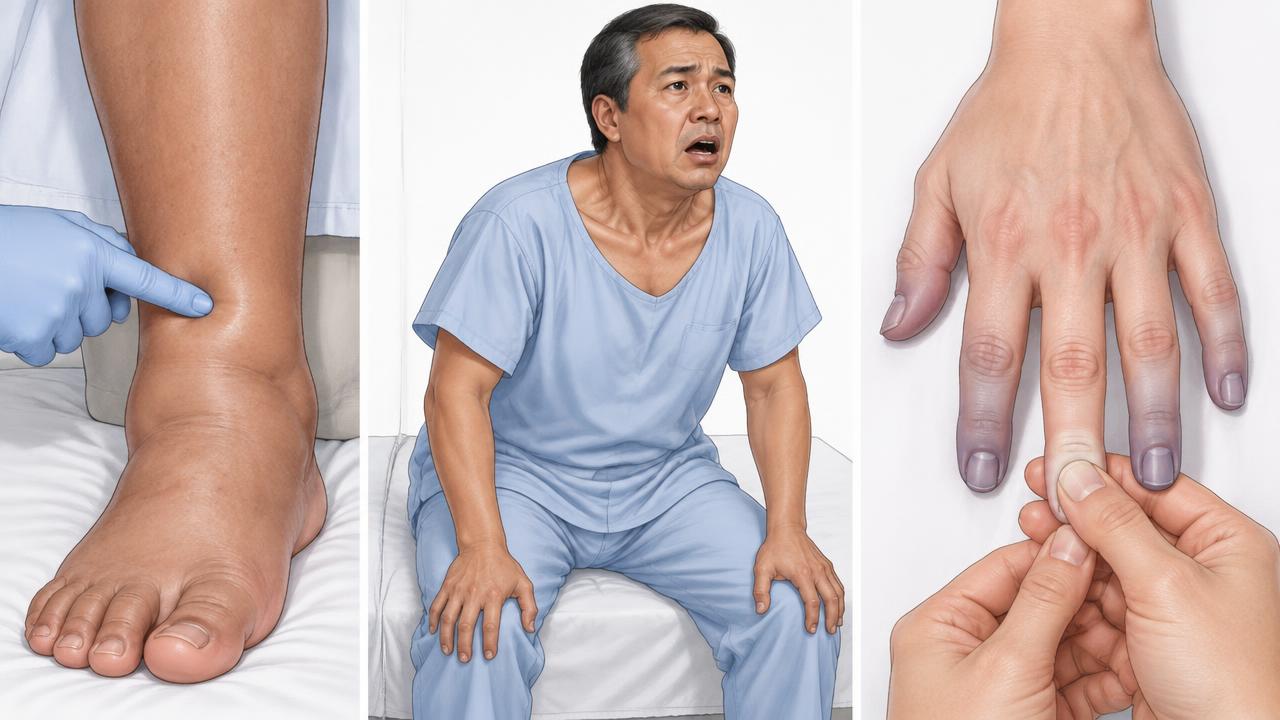
Clinical assessment plate showing pitting edema, increased work of breathing, and peripheral cyanosis with capillary refill
Assessment signs — Compare pitting edema, tripod posture with increased work of breathing, and reduced peripheral perfusion. Connect each visible cue to vital signs, oxygenation, and the priority nursing action.
Emergency Department — 1415

A 68-year-old with COPD and heart failure is sitting upright and leaning forward. RR 34/min with suprasternal retractions, SpO₂ 84% on 2 L/min nasal cannula, HR 118/min, BP 168/92 mm Hg. Breath sounds reveal diffuse crackles with diminished bases. The client can speak only two words at a time and has new confusion.

Which action should the nurse take first?

  1. AIncrease oxygen according to the emergency protocol and position the client upright
  2. BObtain a complete medication reconciliation before intervening
  3. CEncourage pursed-lip breathing and reassess in 30 minutes
  4. DPlace the client supine and prepare a 500 mL normal saline bolus

Answer: Increase oxygen according to the emergency protocol and position the client upright.

Severe hypoxemia, inability to speak, retractions, and acute confusion indicate immediate respiratory compromise. Support oxygenation and ventilation first while escalating care. Medication history and coached breathing may follow stabilization; supine positioning and a fluid bolus can worsen pulmonary congestion.

Study tip: When several cues point to failing oxygenation, intervene for airway and breathing before completing routine assessment tasks.

2. Sepsis — Interpret the TrendSelect all that apply
Clinical assessment plate showing pitting edema, increased work of breathing, and peripheral cyanosis with capillary refill
Assessment signs — Compare pitting edema, tripod posture with increased work of breathing, and reduced peripheral perfusion. Connect each visible cue to vital signs, oxygenation, and the priority nursing action.
Medical Unit — Change from 0800 to 1030

A client receiving treatment for pyelonephritis becomes restless. Temperature rises from 38.1°C to 39.2°C (100.6°F to 102.6°F), HR from 104 to 126/min, RR from 20 to 30/min, BP falls from 112/68 to 88/52 mm Hg, urine output is 15 mL in the last hour, and lactate is 4.1 mmol/L.

Which actions should the nurse take immediately? (Select all that apply.)

  1. AActivate the sepsis response and notify the rapid-response team
  2. BObtain ordered blood cultures before the first antibiotic dose
  3. CBegin the prescribed isotonic crystalloid bolus
  4. DDelay antibiotics until the temperature is below 38°C (100.4°F)
  5. EMeasure urine output and reassess perfusion during resuscitation
  6. FAdminister an antidiarrheal medication to reduce fluid loss

Answer: Escalate care, obtain cultures, begin isotonic fluid resuscitation, and trend perfusion and urine output.

Hypotension, oliguria, tachypnea, altered mentation, and lactate above 4 mmol/L indicate sepsis with impaired perfusion. Cultures should be collected promptly without delaying prescribed broad-spectrum antibiotics. Fluids and frequent perfusion reassessment are time-sensitive; fever is not a reason to delay treatment.

Study tip: Read vital signs as a trend. Falling pressure plus altered mentation, oliguria, and elevated lactate signals shock even before a diagnosis is stated.

3. DKA — Safe Treatment TransitionSingle answer
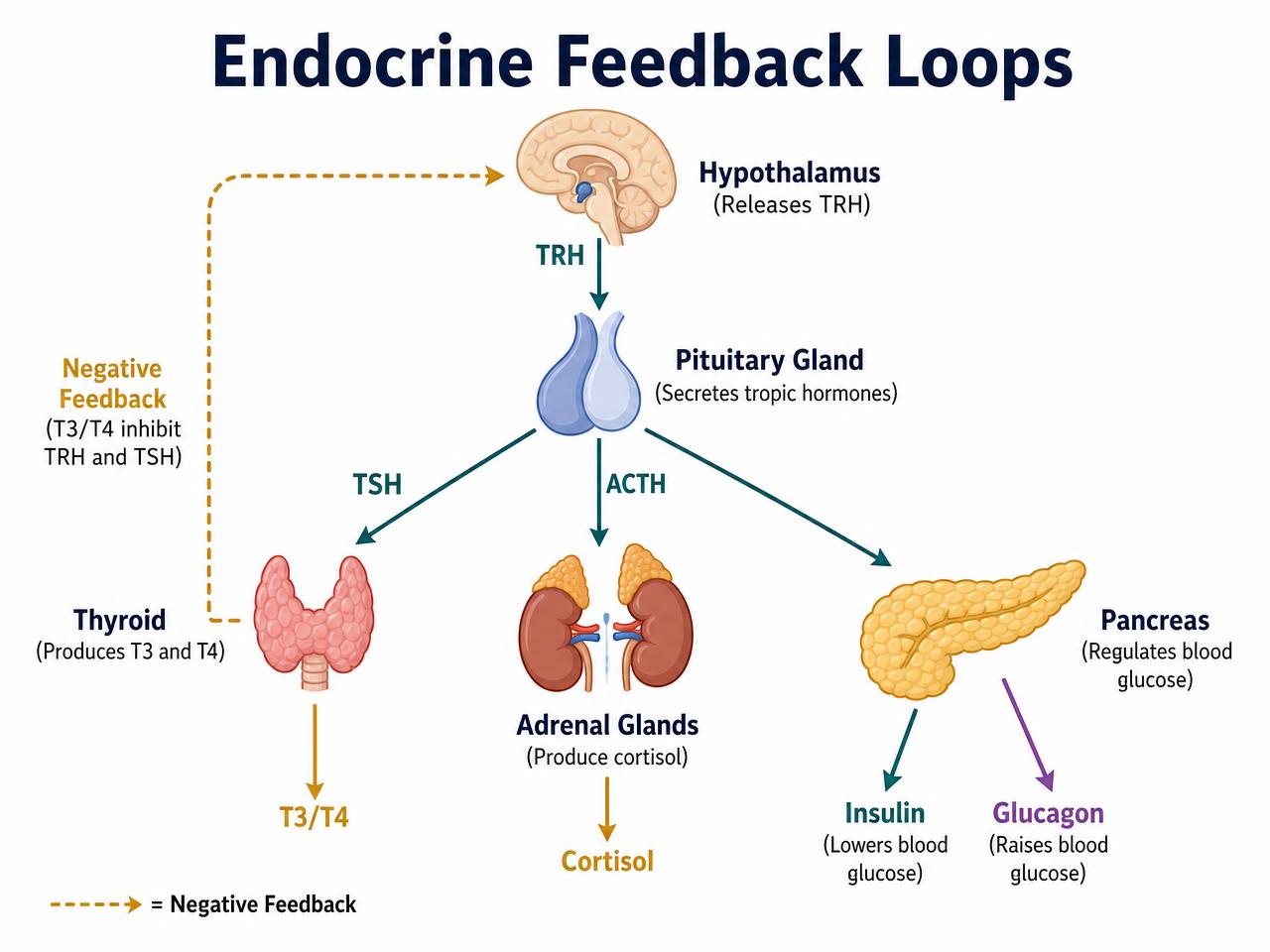
Diagram of hypothalamic-pituitary feedback loops to thyroid, adrenals and pancreas
Figure — Endocrine feedback loops; most exam items hinge on which hormone is high or low and why.
Intensive Care — Four Hours After Treatment

A client with diabetic ketoacidosis is receiving regular insulin by infusion and 0.9% sodium chloride. Current results: glucose 198 mg/dL, potassium 3.2 mEq/L, bicarbonate 14 mEq/L, anion gap 18, pH 7.24. The client is awake; urine output is 45 mL/hr.

Which prescription should the nurse question?

  1. AAdd dextrose to the IV fluid while continuing insulin
  2. BPause insulin temporarily and replace potassium as prescribed
  3. CDiscontinue the insulin infusion because glucose is below 200 mg/dL
  4. DContinue frequent glucose, electrolyte, and anion-gap monitoring

Answer: Discontinue the insulin infusion because glucose is below 200 mg/dL.

The glucose has improved, but acidosis and the elevated anion gap have not resolved. Dextrose is added so insulin can continue clearing ketones. Potassium of 3.2 mEq/L requires replacement and may require a temporary insulin pause because insulin shifts potassium intracellularly.

Study tip: In DKA, glucose normalizes before ketoacidosis. Follow the anion gap and bicarbonate, not glucose alone, when deciding whether insulin can stop.

4. Acute Stroke — Protect the Treatment WindowSelect all that apply
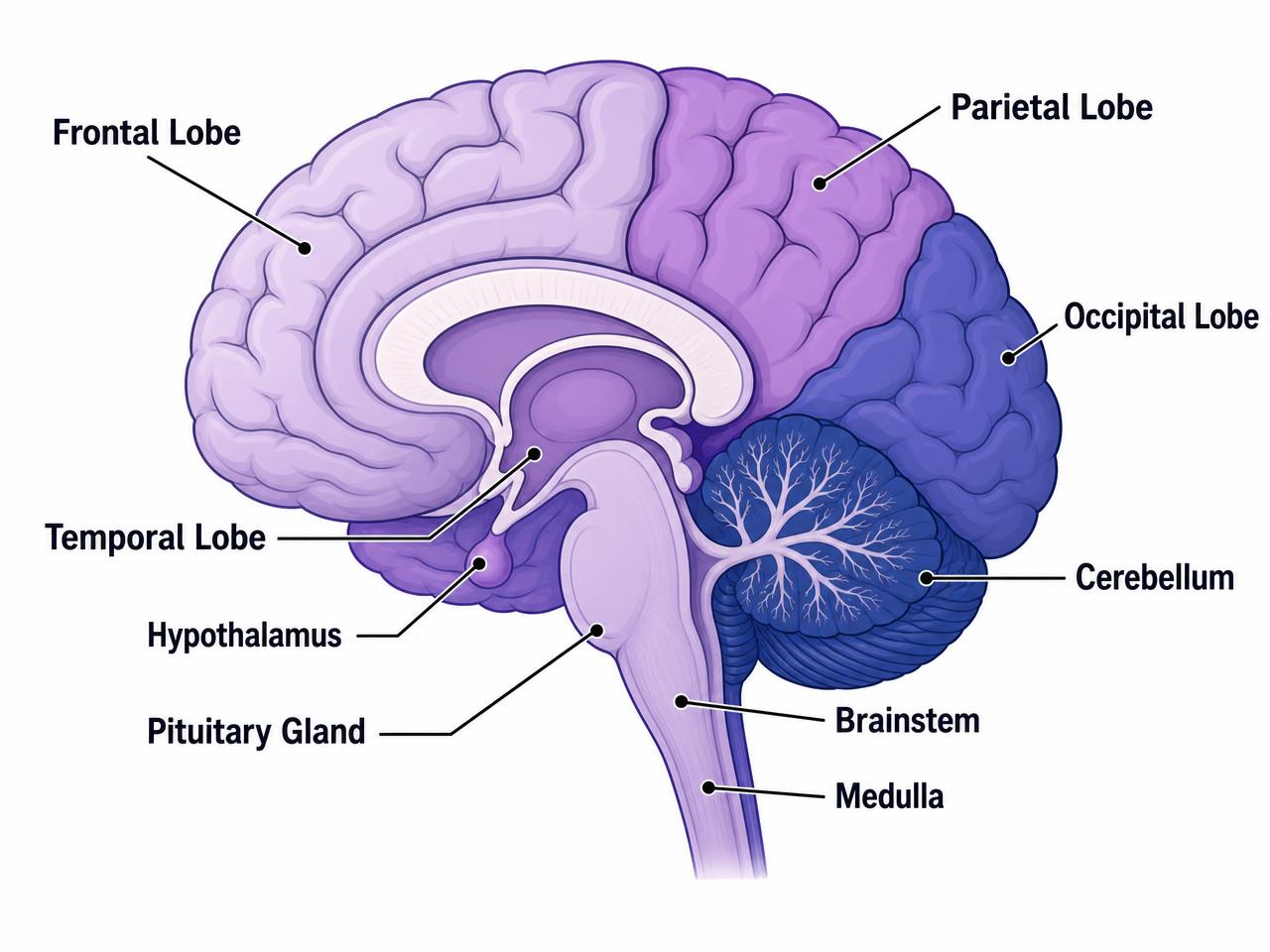
Labelled sagittal view of the brain showing lobes, cerebellum and brainstem
Figure — Brain regions and the deficits that follow when each is injured.
Stroke Alert — 0910

A 72-year-old developed right facial droop, aphasia, and right arm weakness while eating breakfast. The family reports the client was last known well at 0745. Point-of-care glucose is 102 mg/dL, BP 196/108 mm Hg, and noncontrast CT shows no hemorrhage.

Which actions are priorities while the team evaluates thrombolytic therapy? (Select all that apply.)

  1. ADocument the exact last-known-well time
  2. BKeep the client NPO until a swallow screen is completed
  3. CLower blood pressure using the prescribed protocol before thrombolytic therapy
  4. DGive aspirin immediately before the thrombolytic decision
  5. EPerform frequent neurologic and blood-pressure assessments
  6. FPlace the affected arm in a dependent position to improve circulation

Answer: Confirm last-known-well time, keep NPO, manage blood pressure per protocol, and repeat neurologic and blood-pressure assessments.

Time of onset determines eligibility, dysphagia creates aspiration risk, and blood pressure must meet the treatment threshold before thrombolysis. Frequent reassessment detects deterioration. Aspirin is withheld until hemorrhage and thrombolytic decisions are addressed; the weak extremity requires supported positioning.

Study tip: For suspected stroke, protect time, airway, and eligibility: last known well, glucose, CT, swallow safety, and controlled blood pressure.

5. Postpartum Hemorrhage — Find the CauseSingle answer
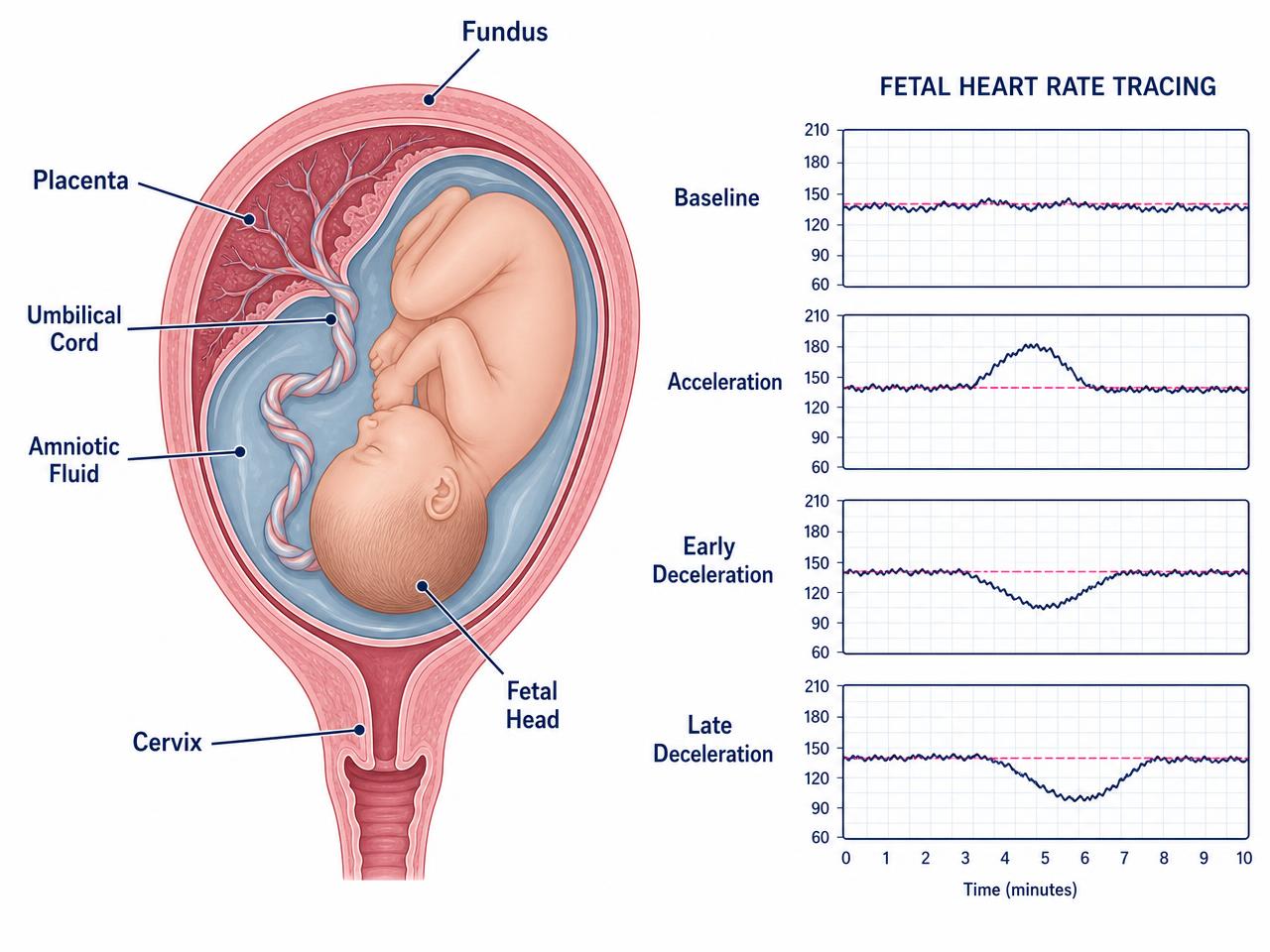
Labelled pregnant uterus with fetus and fetal heart rate tracing patterns
Figure — Maternal-fetal anatomy plus baseline, acceleration, early and late deceleration tracings.
Postpartum Unit — 45 Minutes After Birth

A client saturates a perineal pad in 15 minutes. The fundus is boggy, displaced above and to the right of the umbilicus. HR is 116/min, BP 94/58 mm Hg, and the client reports bladder pressure.

Which action should the nurse take first?

  1. AMassage the fundus while calling for assistance
  2. BPrepare the client for immediate hysterectomy
  3. CApply an ice pack and reassess in one hour
  4. DPlace the client in high-Fowler position and encourage oral fluids

Answer: Massage the fundus while calling for assistance.

A boggy, displaced fundus with heavy bleeding suggests uterine atony worsened by bladder distention. Immediate fundal massage promotes contraction while help, bladder emptying, uterotonics, IV access, and hemorrhage protocols are initiated.

Study tip: Boggy fundus means atony: massage first. A fundus shifted right also points to a full bladder that must be emptied.

6. Hyperkalemia — Connect the Monitor to the LabSelect all that apply
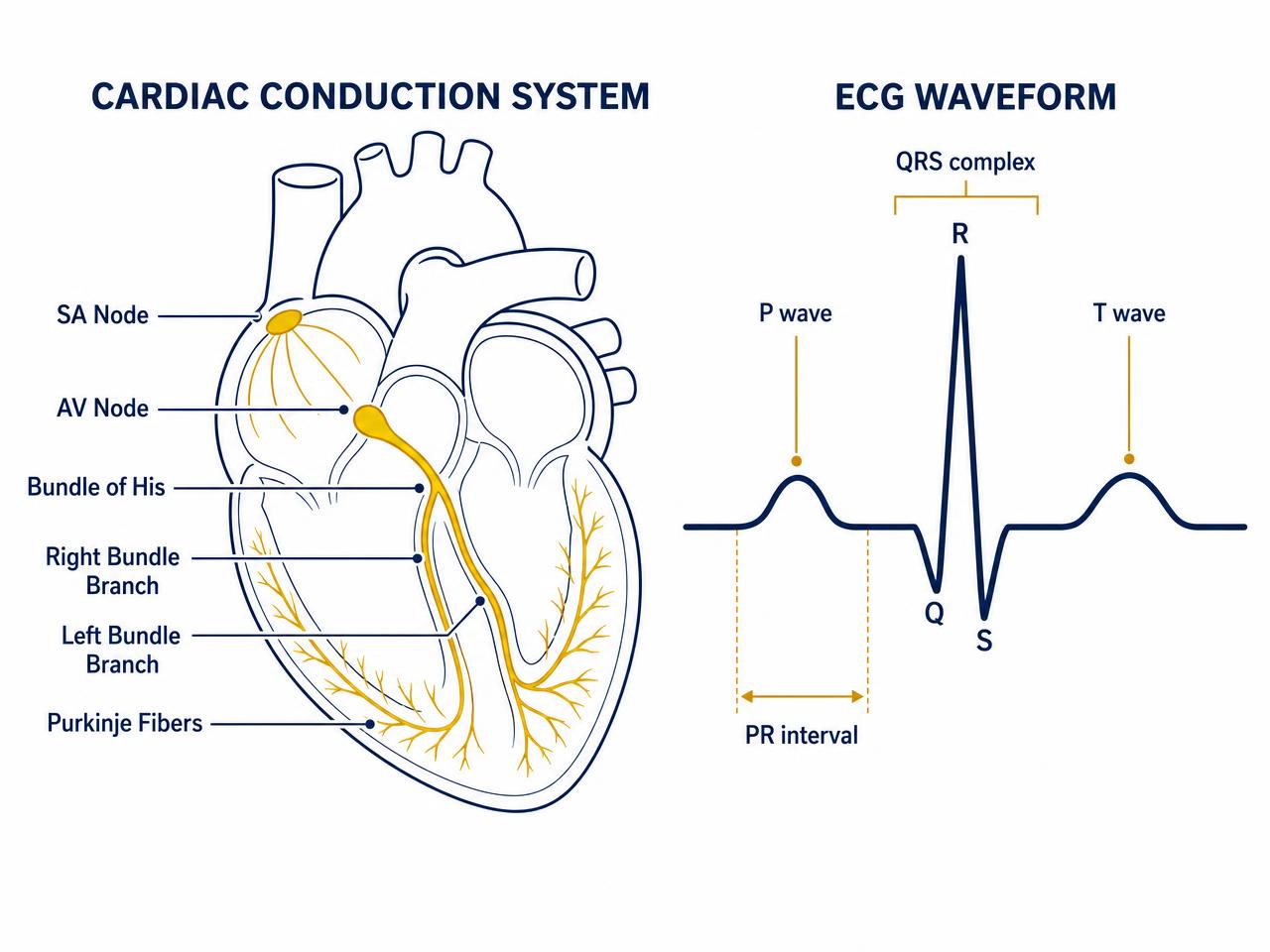
Labelled cardiac conduction pathway with matching ECG tracing
Figure — Conduction pathway and the ECG waveform it produces: SA node → AV node → bundle of His → bundle branches → Purkinje fibers.
Renal Unit — 1730

A client with acute kidney injury reports weakness and palpitations. Potassium is 6.7 mEq/L, creatinine 4.2 mg/dL, and the cardiac monitor shows tall peaked T waves with a widening QRS complex.

Which interventions should the nurse anticipate? (Select all that apply.)

  1. APlace the client on continuous cardiac monitoring
  2. BAdminister IV calcium gluconate as prescribed
  3. CAdminister regular insulin with dextrose as prescribed
  4. DEncourage foods high in potassium
  5. EPrepare for potassium removal therapy if levels remain elevated
  6. FAdminister potassium chloride by IV push

Answer: Continuous monitoring, IV calcium, insulin with dextrose, and preparation for potassium removal.

ECG changes make this a cardiac emergency. Calcium stabilizes the myocardium, insulin with dextrose shifts potassium into cells, and definitive removal may require a potassium binder, diuretic, or dialysis depending on kidney function and response.

Study tip: Treat hyperkalemia in three steps: protect the heart, shift potassium into cells, then remove potassium from the body.

That was 6 questions. Want more practice?

The October 2026 question pack covers every Client Needs category for both the RN and the PN test plan, including Next Gen case studies, bow-tie, matrix, cloze and highlight items, each with the answer, a full rationale, and a study tip. One payment, yours to keep.

Can’t find the exact subject?

Search the complete collection or request a focused educational guide around your course objectives. Your price appears after email entry, and a purchase link is sent only after the file is prepared and checked.

Search all study books

Study with purpose

Review the concept. Practice the decision. Save what you learned.

Naxlex.site answers

Know what you can study before you begin

What can I study on Naxlex.site?

Naxlex.site organizes TEAS 7, HESI A2, nursing-school, HESI Exit, NCLEX-RN, NCLEX-PN, Next Gen clinical judgment, pharmacology, dosage calculation and body-system study resources in one directory.

Is there a free Naxlex.site account?

Yes. A free account keeps selected practice, progress and study activity together. Pro adds the complete interactive workspace and read-only access to every sale-ready Pro library book while access is active.

What is included in the study workspace?

The workspace includes Tutor, Timed and Adaptive practice, saved sessions, missed-question review, lessons, notes, flashcards, simulations, searchable books, schedules and reports.

Are the practice questions actual exam questions?

No. The questions are original educational practice items built around published exam plans and common nursing-school objectives. They are not actual or recalled exam questions.

Can I request a study topic that is not listed?

Yes. Search for the subject or request a focused custom guide. A payment link is sent only after the guide file has been prepared and checked; personal custom guides are separate from reviewed catalog editions.

How are purchased books delivered?

Each sale-ready book has its own product page, preview, price and secure delivery mapping. The established NCLEXVault checkout delivers the exact file described on that product page.